Last week’s piece, “Korea Was Closed. Chips Fell Anyway.”, left one question unanswered: was this global AI-hardware selloff a positioning accident or a macro breakdown? The past three sessions answered it. It was the positioning accident.
The assets that fell hardest and were most crowded also bounced the most, and then stalled first. China’s STAR 50 rose 10.73% on Tuesday (July 21) and gave back 2.26% on Wednesday (July 22); the ChiNext index rose 7.05% on Tuesday and fell 3.24% on Wednesday. Over the same stretch, the Shanghai Composite returned +0.85%, +1.79%, and +0.07% across the three days — a steady drift higher that barely joined the violent swings. KOSPI was more extreme still: it opened about 4.5% higher on Wednesday, ran to 7,166 intraday, and closed up just 0.74%, surrendering almost all of the gain within the day.
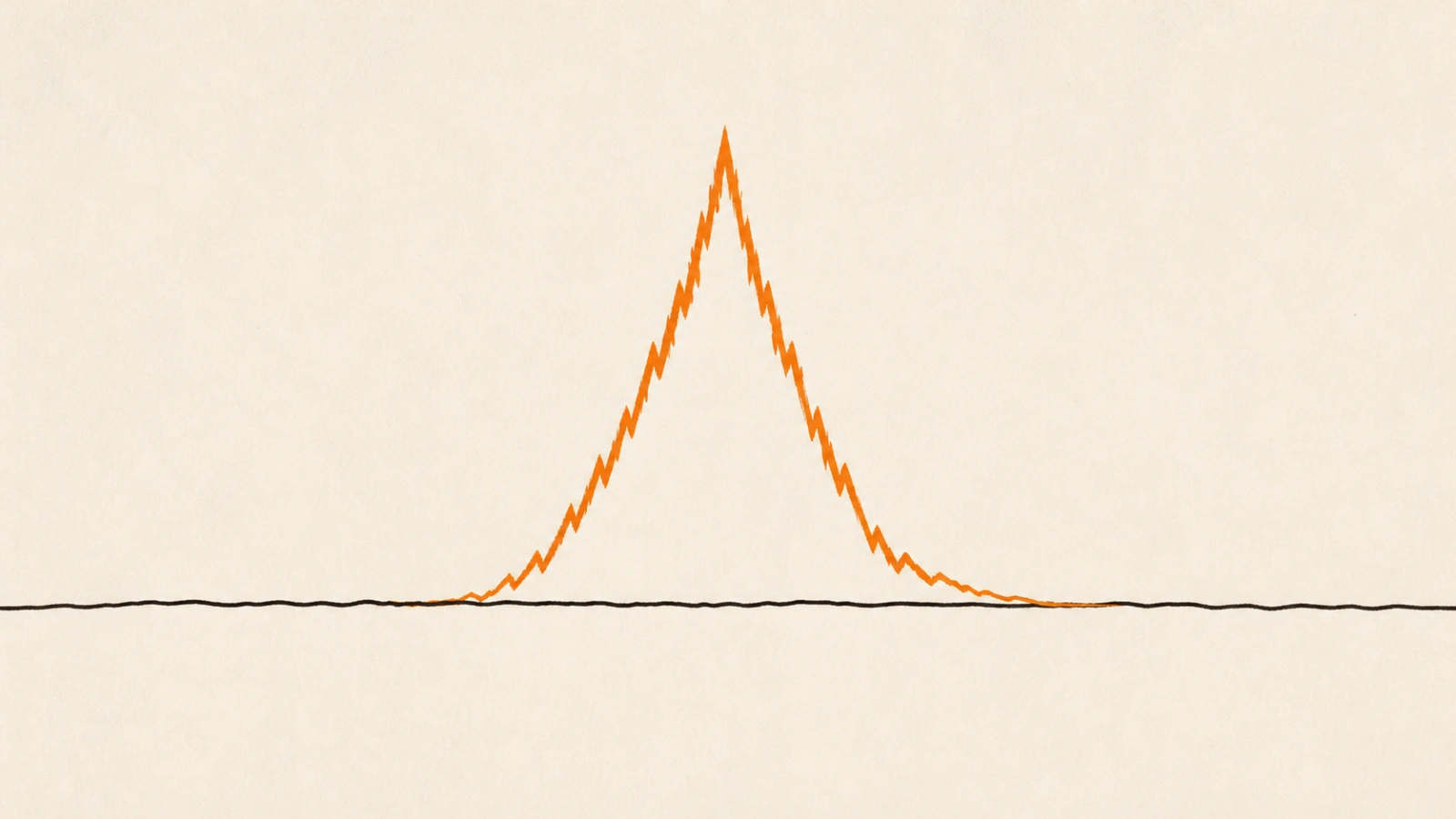
This is not a simple “selloff versus rebound.” It is crowded positioning being thrown violently in both directions while the broad index sits in the middle and does not move.
Nearly Every Signpost Points to a Positioning Accident
Last week I laid out two forks. In the original words: if semiconductor volume subsides, breadth improves, and TSMC and ASML recover quickly, this decline is most likely a positioning accident; if the selling spreads into credit, banks, and industrials while long bonds stop providing protection, it deserves the larger macro explanation.
Three sessions in, the signposts point almost entirely to the first.
Advancers in China’s semiconductor basket (roughly 181 constituents) ran 18 up and 163 down on Monday, then flipped to 180 up and 1 down on Tuesday — an extreme reading, close to a full-basket snap-back. TSMC’s ADR rose 5.55% on Tuesday and ASML rose 3.59%, recovering most of last week’s losses in two days. U.S. semiconductors closed broadly higher overnight, with Nvidia up 1.47% and Broadcom up 2.05%, while the VIX dropped 8.15% in a day to close in the low 17s. On Eastmoney Choice’s all-A-shares basis, the margin-financing balance was still edging lower on Monday (about RMB2.581 trillion) and roughly steadied on Tuesday (about RMB2.582 trillion) — this series is not the same dataset as the exchange aggregate cited last week, so it cannot be spliced or subtracted against it, but its own trajectory says the deleveraging pressure has stopped.
As for the other fork — a spread into credit and banks — I did not obtain reliable credit-spread or bank-stock data, so I can only say “no contrary evidence appeared”: long Treasuries (TLT) barely moved, gold kept rising, and the Shanghai Composite held. That is weak evidence, not a confirmation that “no spread happened.”
Closing Out an Accident Is Not the Same as Restarting a Trend
By the third day, the rebound was already fading. On Wednesday the STAR 50 and ChiNext both turned red, semiconductor advancers dropped from 180 back to 56 up and 125 down, and KOSPI gave back nearly all of its higher open. The violent V-reversal lasted a single day. This looks more like crowded positions that had been beaten to the floor staging one round of short-covering and a technical snap-back, rather than new buyers holding prices up.
The bull case would say risk appetite is simply back: U.S. semiconductors all green, TSMC and ASML recovered, the VIX collapsed — the selloff is over and the upside is resuming. There is something to that; the most crowded assets did stop bleeding.
My reservation is with breadth and volume. A real trend restart usually needs the rebound to spread out from a handful of index heavyweights, advance-decline to keep improving, and the broad index to confirm on rising volume. This time it did not — the Shanghai Composite barely moved across three days and showed no volume surge, and the STAR and ChiNext rebounds narrowed within a day. The sharpest bounce fading first is exactly what positioning-driven, rather than fundamentally driven, moves look like. The orders are still there and the demand is still there, but the patience to take the other side lasted just one day of a revenge snap-back.
What would overturn the “positioning accident” read? If Wednesday’s fade turns into a second leg down, and this time the selling really floods across credit spreads, bank stocks, and industrials, with long bonds no longer hedging and the broad index falling on rising volume, then it has to be treated again as a macro problem, not a positioning one. Conversely, if the rebound regrows breadth — advance-decline climbing steadily, the Shanghai Composite confirming on volume, leadership spreading from the STAR board into more sectors — that is a genuine trend restart.
At least through the July 22 close, neither has happened. The accident is closing out, but it is still only a closing-out.
Sources: KRX, Eastmoney Choice market data, and Yahoo Finance. KOSPI and A-share figures refer to the July 20–22, 2026 closes; U.S. equity, VIX, TLT, and gold figures refer to the July 21 New York close (U.S. markets had not closed on July 22, and those figures are not included here). A-share semiconductor advancers, sector definitions, and the margin-financing balance use Eastmoney Choice classifications, where the margin figure is an all-A-shares statistic that may differ from other vendors’ or the exchanges’ aggregate methodology. The “positioning accident versus macro breakdown” judgment is based on three sessions of price breadth, turnover, and public information; it is a research observation, not a proven single cause. This piece is a personal observation and does not constitute investment advice.