Semi Strength Did Not Continue
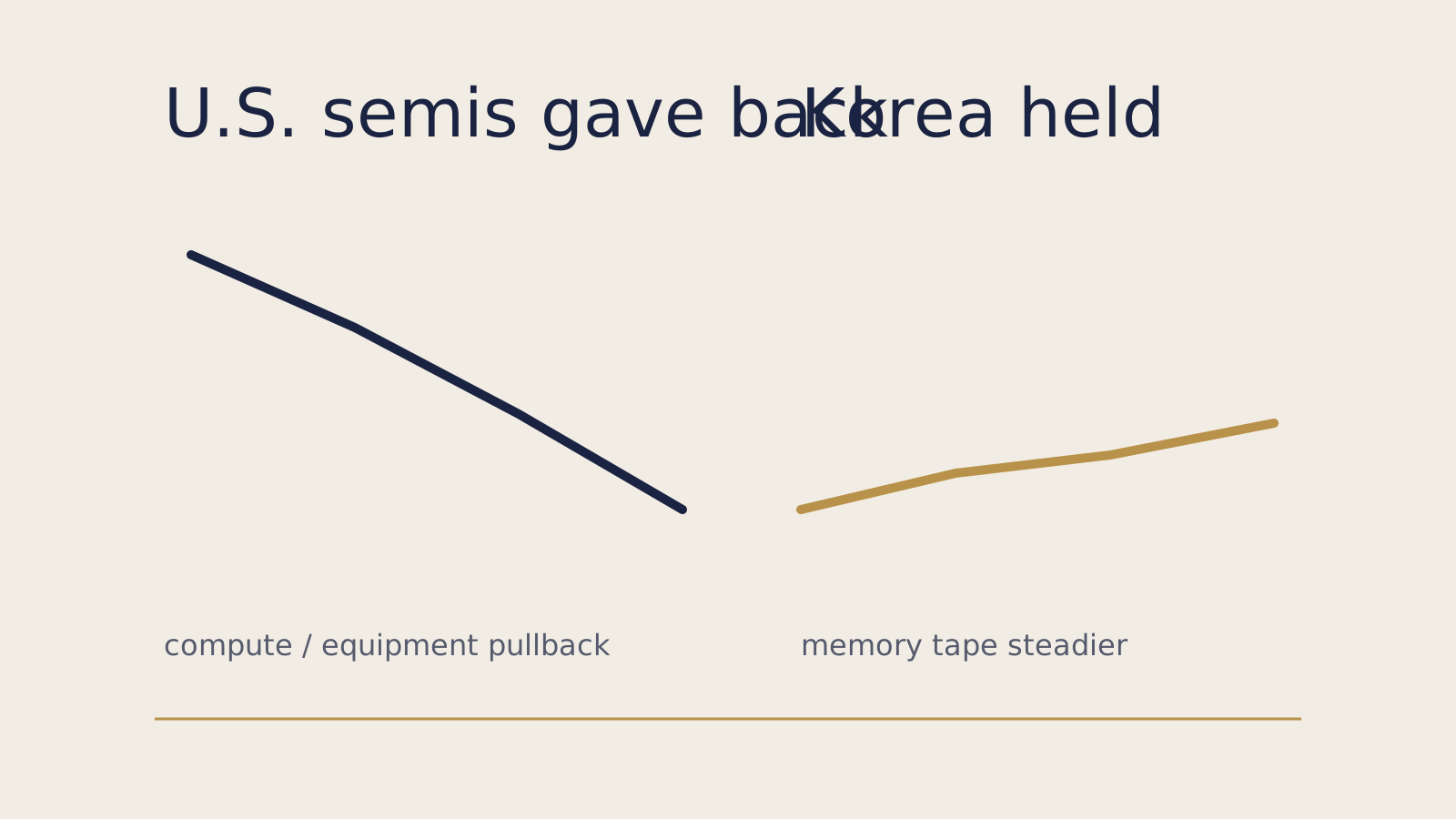
The U.S. compute chain was strong on April 24. By April 28, it had given back. NVDA fell 1.59%, TSM 3.12%, ASML 3.34%, AMD 3.41%, MRVL 3.15%, CoreWeave 5.83%, and QQQ 1.01%. SPY fell 0.49%, while VIX actually slipped 1.05% to 17.83 (Yahoo Finance daily price data, 2026-04-28).
A-shares were weak too: CSI 300 -0.27%, CSI 500 -1.15%, CSI 1000 -1.34%. Mid/small-cap beta stayed weaker than large caps, so the prior broad-index elasticity was still being digested.
Korea did not fall in sync. KOSPI rose 0.75%, KOSDAQ 0.39%, Samsung Electronics 1.80%, while SK hynix slipped 0.54%. Against the U.S. semi giveback, Korea memory looked relatively steady.
Capital Was Reallocating Across Links
The signal was not simply “tech fell.” It was who fell and who did not. U.S. semis from AMD to ASML gave back, which means April 24’s compute confirmation did not extend directly. A-share mid/small caps stayed weak, so mainland risk appetite was not reignited by the prior U.S. strength.
Korea’s steadier tape may reflect a different pricing rhythm for memory. Memory has its own cycle, pricing, and HBM constraints; it does not have to follow NVDA / TSM tick for tick. The chain separation seen repeatedly through April was still there.
If U.S. semis fall while Korean memory holds, the market is not simply selling the AI theme. It is reallocating risk across links.
The Other Side
There is a milder explanation.
VIX did not rise. U.S. equities fell, but volatility stayed low. That looks more like profit-taking than stress.
Korea may only be lagging. Time-zone rhythm matters; one day is not proof that memory is independent.
A-share declines were still contained. CSI 1000 -1.34% is not trivial, but it was not a structural break.
So April 28 was better read as post-strength filtering than a tech-risk repricing.
Closing
U.S. semis gave back, A-share mid/small caps weakened, and Korea memory held up. The AI chain split again: compute, equipment, foundry, and memory were not moving as one block.
At this stage of a theme, watching only NVDA or QQQ misses information. The key is whether relative strength across links persists.
Data sources: US semiconductors and large-caps (NVDA, TSM, ASML, AMD, MRVL, CRWV, QQQ, SPY, VIX), A-share broad indices (CSI 300 / 500 / 1000), and Korean benchmarks (KOSPI, KOSDAQ, plus Korean memory names) price data from the Yahoo Finance daily price data, trading day 2026-04-28, queried 2026-05-26.