Breadth Lasted One Day
On April 23, the market discounted the prior day’s optimism. A-share broad indices pulled back: CSI 300 -0.28%, CSI 500 -0.97%, CSI 1000 -1.40%. The mid/small-cap assets that had been stronger gave back more.
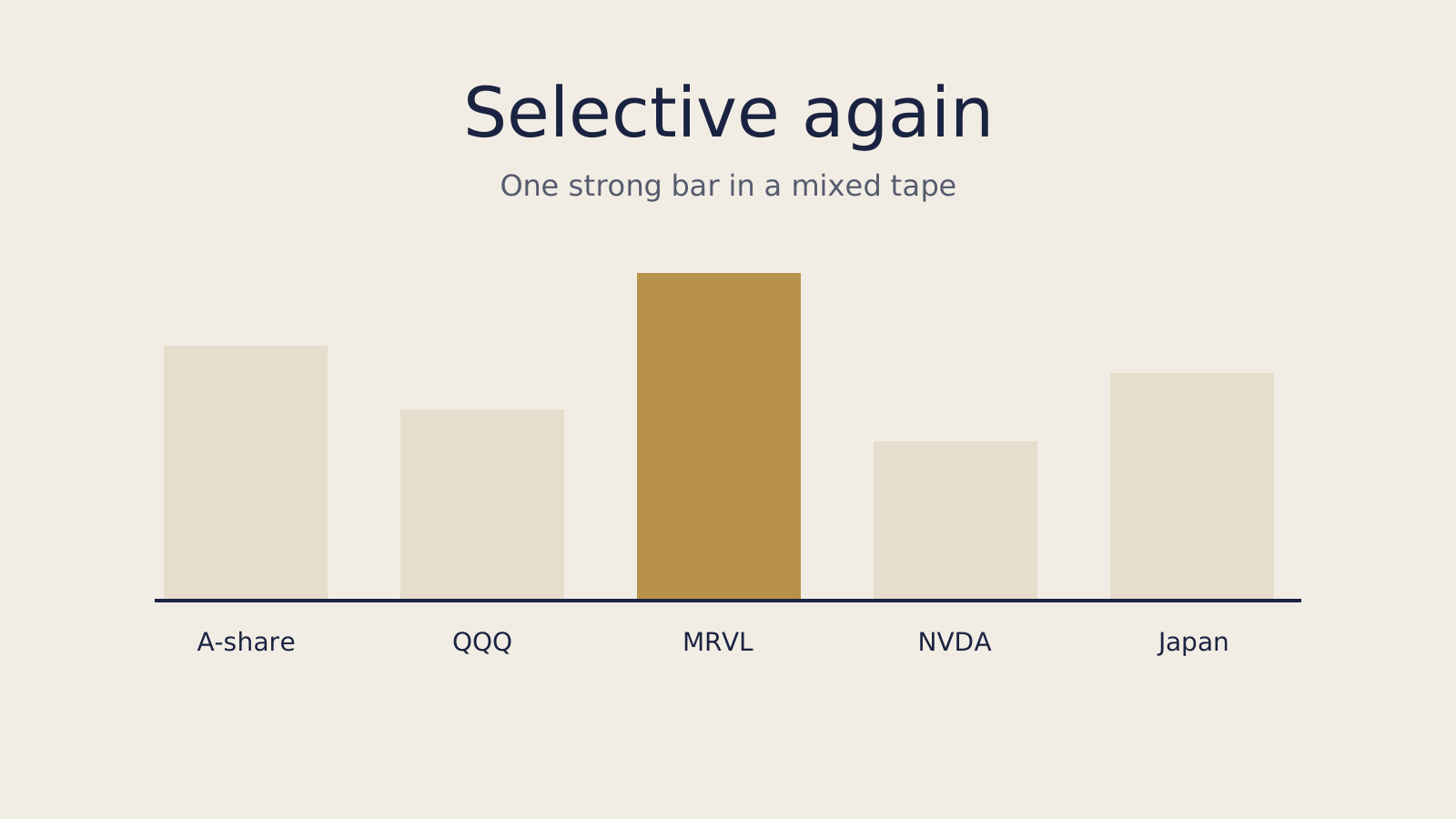
The U.S. softened too: SPY -0.39%, QQQ -0.56%, NVDA -1.41%, TSM -1.23%, ASML -1.79%. Yet there were still strong points inside semis: MRVL +5.24%, AMD +0.62%. VIX rose 2.06% to 19.31. Asia was split: Nikkei 225 +0.97%, Tokyo Electron +0.81%; KOSPI was flat, Samsung Electronics -2.23%, KOSDAQ +2.51% (Yahoo Finance daily price data, 2026-04-23).
This was not a breakdown. It was broad repair failing to become continuous. Capital was still buying specific beta, but no longer buying the whole basket.
Selection Mattered More Than Direction
April 22 asked whether repair could broaden. April 23 answered: yes, but not necessarily for more than a day. A-share mid/small caps gave back, U.S. core tech weakened, and volatility ticked up. The market had not entered a smooth uptrend.
But MRVL and KOSDAQ strength say capital was not simply leaving. It was looking for more specific exposures: AI networking, memory, Korea/Japan beta differences, rather than just buying tech indices.
In that environment, index direction can feel blunt. The real change sits inside the tape: whether yesterday’s leaders can stay leaders, and whether yesterday’s laggards can confirm. April 23’s answer was dispersion.
The Other Side
The milder read is digestion.
The declines were small. SPY, QQQ, and CSI 300 slipped, but did not damage the prior repair structure.
Strong points remained. MRVL +5.24% and KOSDAQ +2.51% show high-beta capital was still active.
VIX stayed below 20. Volatility had not returned to a stress zone.
So the day was better described as post-repair filtering than the end of repair.
Closing
April 23 gave a reminder: breadth can return and narrow again quickly. U.S. tech and A-share mid/small caps had joined on April 22; one day later, A-shares fell, U.S. core tech weakened, and only selected semiconductor points held up.
That is not bearish enough to rewrite the direction. It does say the market had not entered automatic repair. After every rally, breadth still had to prove it could stay.
Data sources: A-share broad indices (CSI 300 / 500 / 1000), US large-caps and semiconductors (SPY, QQQ, NVDA, TSM, ASML, AMD, MRVL, VIX), and Asian benchmarks (Nikkei 225, KOSPI, KOSDAQ, plus Japanese and Korean semiconductor names) price data from the Yahoo Finance daily price data, trading day 2026-04-23, queried 2026-05-26.