Core Judgment
The most important price action today wasn’t the US futures selloff. It was Asia’s reaction.
KOSPI fell 0.86%, Nikkei dropped 0.74%, Hang Seng lost about 1%, A-shares closed roughly flat. One day’s moves are noise. The backdrop isn’t.
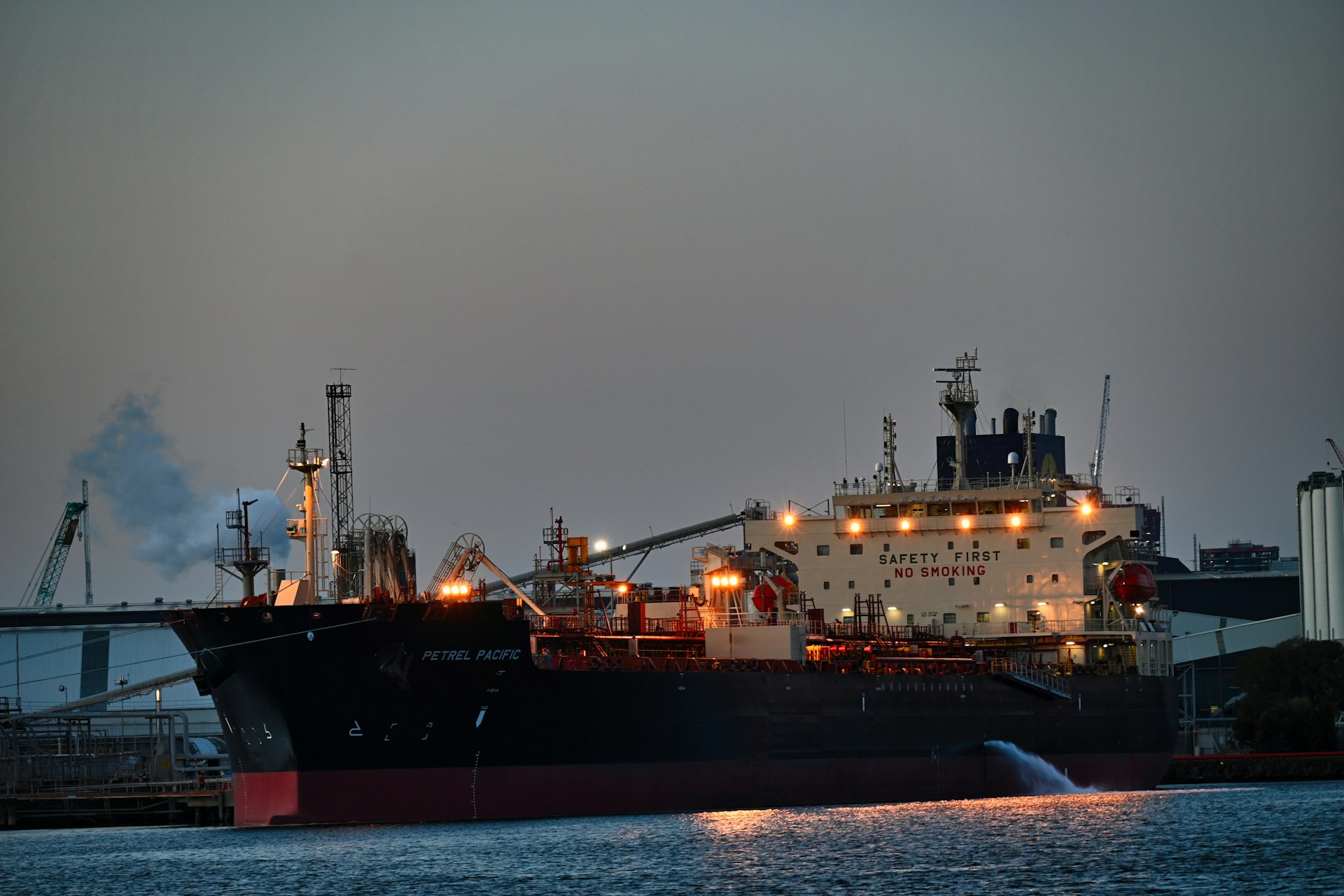
Talks collapsed over the weekend. Trump announced a naval blockade on Iranian ports, and WTI surged 8.7% to $104.97 in a single session. CENTCOM clarified the blockade targets ships entering and leaving Iranian ports only — the Strait of Hormuz remains open to non-Iranian vessels. But markets aren’t pricing the status quo. They’re pricing escalation risk. Iran’s crude exports account for 3-4% of global supply — limited direct impact. What’s really weighing on Korea, Japan, and Hong Kong is the possibility that the port blockade expands into a full strait closure. 75% of Japan’s and 60% of Korea’s oil imports transit the Strait of Hormuz — if the blockade escalates, they’re first in line.
China’s energy import mix is more diversified — Russian pipeline crude and Central Asian overland routes provide a buffer, making the Hormuz transmission relatively indirect. But China is also Iran’s largest crude buyer, and the blockade hits Chinese imports directly. Not something to dismiss.
After the Blockade: Three Paths
Last week markets ran a “ceasefire trade” — the three major indices posted their strongest week since November, with the Dow up 3% and Nasdaq up 4.7%. Forty-eight hours later, most of those gains got swallowed by the oil spike. The question isn’t whether the blockade is bearish — that’s obvious. The question is where the blockade goes next.
Path One: Coercive blockade (1-2 weeks). The blockade stays confined to Iranian ports, aimed at forcing Iran back to the table. Non-Iranian vessels transit normally, global supply gap stays limited. Oil oscillates between $100-110 then fades, and markets digest it as noise. This is what the market is betting on.
Path Two: Prolonged standoff (1-3 months). Iran doesn’t return to talks, the US won’t escalate but won’t withdraw — the port blockade becomes a low-intensity war of attrition. Oil stays above $100, and energy costs start feeding through to transport, chemicals, and food. For pure importers like Japan and Korea, this means sustained margin compression — Korean refining and petrochemicals already led declines today. But oil might not be the most dangerous thing here. The FT reported that non-US central banks have net-sold $82B in Treasuries since the Iran war began, pushing 10Y yields up roughly 30bp over six weeks. If the standoff drags on, the chain — oil up, trade deficits widen, Treasury selloff accelerates, global liquidity tightens — is more dangerous than the oil price itself.
Path Three: Full strait closure. Iranian retaliation widens the conflict, and the blockade spreads from Iranian ports to the entire Strait of Hormuz. This is tail risk — low probability but enormous cost. The 2026 version of the “energy crisis” narrative gets activated, and at that point, oil has no ceiling.
Markets haven’t picked a side. The sell-off in Korea, Japan, and Hong Kong wasn’t panicked enough to price in a crisis, but it wasn’t shrugging off the news either. A-shares closed flat — one day tells you nothing.
The Counterargument
There are real reasons to be skeptical of the blockade’s impact:
- The US is a net energy exporter. High oil prices aren’t entirely bad for it — the shale supply chain benefits directly.
- Asia has strategic reserves. Japan holds roughly 200 days of supply after the first round of releases, well below pre-war levels. Korea, after releasing a record 22.46 million barrels in March, has only about 26 days of government-owned reserves left — far below the IEA’s 90-day minimum. A short blockade won’t cause physical shortages, but Korea’s buffer is razor thin.
- March was a dress rehearsal. Oil rallied the first time Hormuz closed. Today’s $104 print may already embed a significant risk premium.
- Korea is actively hedging its Hormuz dependence. Korea’s Minister of Trade confirmed on April 12 that a crude supply deal with Kazakhstan is close, while delegations are visiting Oman and Saudi Arabia to diversify sources. But Kazakh export capacity is near its limit, and the pipeline-to-tanker route takes 50-60 days to reach Korea — more of a signaling hedge than a genuine supply substitute.
The counterargument has to answer one question: if the blockade lifts within two weeks, all of the above holds. What if it doesn’t? Japan and Korea’s strategic reserves were designed for short disruptions, not for a three-month standoff.
What to Watch
- Oil persistence: Can WTI hold above $100 for more than five trading days?
- Korea and Japan follow-through: KOSPI and Nikkei over the next few days tell you more about the real-economy impact than US equities do. Watch Korean refining and petrochemicals, Japanese power and transport
- A-share follow-through: A-shares were flat today — whether they stay resilient or play catch-up on the downside over the next few days is more informative than one session
- Bank earnings season kicks off: Goldman today, JPMorgan/Citi/Wells Fargo on Tuesday. Credit loss provision guidance will be the first hard evidence of what the real economy is feeling