On the Second Day, the Repair Broadened
April 7 was the high-beta rebound in Japan-Korea semis. April 8 was when the repair actually broadened. A-share broad indices rose hard: CSI 300 +3.49%, CSI 500 +4.94%, CSI 1000 +4.60%. This was no longer the sub-2% repair of April 1. Mid- and small-cap beta expanded clearly.
The U.S. also confirmed: SPY +2.55%, QQQ +2.97%, NVDA +2.23%, TSM +5.96%, ASML +8.77%. VIX fell from 25.78 to 21.04, down 18.39% on the day. The April 7 gap — Asia bounced first, the U.S. did not confirm — was partially filled on April 8.
But leadership moved. The strongest assets on April 7 were Japan and Korea. On April 8, they pulled back: Nikkei 225 -0.73%, Tokyo Electron -0.52%, KOSPI -1.61%, SK hynix -3.39%, Samsung Electronics -3.09% (Yahoo Finance daily price data, 2026-04-08).
Not the Same Assets Leading Twice
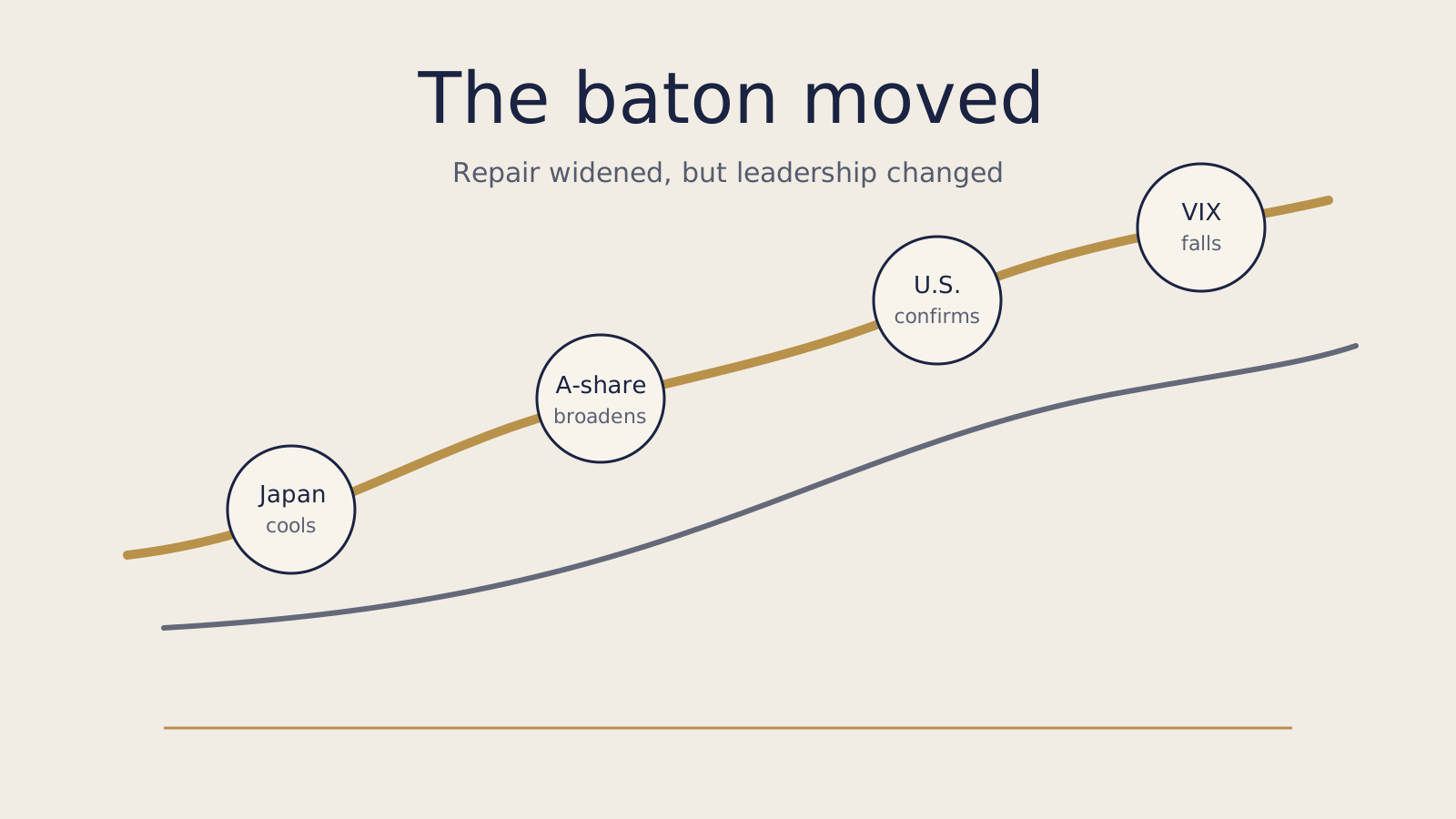
Broader repair does not mean every asset rises together. The better description is that the baton changed hands.
The first leg was April 7: Japan-Korea semis, high beta, sharp rebound, reclaiming part of the prior drawdown. The second leg was April 8: U.S. tech and A-share broad indices, with U.S. core semis confirming and A-share mid/small-cap beta expanding. The Japan-Korea pullback says a meaningful part of the prior day’s move was oversold repair, not continuous acceleration.
That matters. Genuine risk repair does not always show up as the same assets leading every day. More often, pressure releases first in the most sensitive assets, then spreads into wider assets. April 8’s positive was that both the U.S. and A-shares participated. The discount was that Japan and Korea did not keep leading.
The Other Side
The more constructive read is that this was exactly what healthy broadening looks like.
Leadership rotation is better than a single spike. If only SK hynix and Tokyo Electron kept surging, the move could look like a narrow high-beta rebound. A-share broad indices and U.S. indices joining makes the repair less isolated.
VIX falling improved the quality of the move. On April 7, equities bounced while VIX rose. On April 8, equities rose and VIX fell. Risk pricing was more internally consistent.
A-share mid/small-cap beta was real. CSI 500 +4.94% and CSI 1000 +4.60% outpaced CSI 300, so the repair was not only in large-cap weights.
Those points all stand. April 8 was not simply Japan-Korea giving back. It was a sample of repair moving from one high-beta chain into wider assets.
Closing
April 8 advanced the prior day’s question: the U.S. confirmed, A-shares amplified, and volatility came down. The repair spread from Japan-Korea semis into U.S. tech and A-share broad indices.
But the early leaders pulled back. The market repaired through handoff, not in a straight line. The important question was no longer which market was strongest on one day, but whether the baton could keep moving.
What to Watch
The following is an observation framework, not a trading signal.
- Whether A-share mid/small-cap beta persists. CSI 500 / CSI 1000 strength versus CSI 300 is the key breadth read.
- Whether U.S. semis keep confirming. TSM, ASML, and NVDA decide the quality of the global AI-chain repair.
- Whether Japan-Korea stops giving back. If the first-leg leaders keep falling, high-beta repair remains fragile.
Data sources: A-share broad indices (CSI 300 / 500 / 1000), US large-caps and semiconductors (SPY, QQQ, NVDA, TSM, ASML, VIX), and Asian benchmarks (Nikkei 225, KOSPI, plus Japanese and Korean semiconductor names) from the Yahoo Finance daily price data (Yahoo Finance daily prices and public A-share index quotes), trading day 2026-04-08, queried 2026-05-26.